
Custom Servo Hydraulic & Vibration Testing Systems
When precision, repeat accuracy, and compliance matter, industrial laboratories and universities rely on high-performance testing systems engineered by Servo Hydraulic Solutions. We specialize in designing and manufacturing custom servo hydraulic systems and vibration testing platforms tailored to your exact application. From short-term evaluation to multi-year fatigue life analysis, our testing equipment delivers the reliability you need to qualify products to the world's strictest regulatory standards.
Regulatory & Compliance Testing Systems (IEEE-344, GR-63 & ISTA)
We build custom testing systems engineered specifically for standard-compliant qualification testing across multiple industries:
- IEEE-344 testing systems: Precision seismic qualification systems engineered for nuclear, safety-critical, and electrical equipment certification. Our controls ensure accurate replication of Required Response Spectra (RRS).
- GR-63 testing systems: Telcordia/Bellcore NEBS compliance testing equipment designed to simulate earthquake and network rack vibration stress for telecommunications hardware.
- ISTA vibration testing: Dynamic transit and transportation simulation testing systems that verify packaging integrity and payload durability against real-world freight vibrations.
High-Performance Components: Actuators & Power Supplies
A testing system is only as reliable as its core driving components. Using proven Commercial Off-The-Shelf (COTS) parts, we integrate:
- Fatigue rated actuator systems: Built for continuous, high-cycle durability testing without mechanical breakdown, ensuring consistent load application over millions of cycles. Our testing systems also seamlessly integrate with precision components like the 68/69 Series Backlash-Free Swivels for zero mechanical play.
- Custom Hydraulic Power Supplies: Quiet, energy-efficient, and engineered to match your laboratory's exact flow (GPM) and pressure requirements. We also offer low-noise hydraulic pumping system configurations for indoor research environments.
Why Partner with Servo Hydraulic Solutions for Your Testing Equipment?
Led by Doug Weller in Boulder, Colorado, our team brings nearly 20 years of hands-on global experience in designing, installing, and servicing advanced testing systems.
- No Vendor Lock-in: Our commitment to open-architecture COTS components means your testing systems remain easy to maintain, upgrade, and repair without expensive proprietary service contracts.
- Complete System Revitalization: In addition to new builds, we provide existing servo hydraulic maintenance and repair—upgrading older mechanical testing setups with modern digital controllers and custom software interfaces.
- Direct RFQ & Engineering Support: We work directly with your engineering team to match operational needs with cost-effective solutions.
Frequently Asked Questions About Testing Systems
1. What types of vibration and seismic testing systems do you manufacture?
We engineer custom servo hydraulic testing systems and vibration test platforms for multi-axis structural and mechanical testing. Our systems are built to qualify equipment to international regulatory standards, including IEEE-344 testing systems for seismic qualification, GR-63 testing systems for telecom rack vibration, and ISTA vibration testing for packaging durability.
2. What is the advantage of using Commercial Off-The-Shelf (COTS) components in testing systems?
Using dependable COTS components eliminates vendor lock-in and proprietary service restrictions. It ensures that replacement parts like servo valves, manifolds, and sensors are easily sourced globally, making long-term maintenance significantly cheaper and system upgrades simpler.
3. Can you customize hydraulic power supplies and actuators for specific laboratory requirements?
Yes. We design and integrate Custom Hydraulic Power Supplies tailored to your lab’s exact flow (GPM) and pressure requirements, including low noise hydraulic pumping system setups for quiet indoor research environments. We also integrate fatigue rated actuator units designed for continuous, high-cycle structural endurance testing.
4. What is Pseudo-Dynamic Testing (PDT), and how does it differ from traditional shake tables?
In Pseudo-Dynamic Testing (PDT), large-scale structures are excited slowly at low frequencies using multiple computer-controlled actuators. A digital controller internally calculates theoretical inertial forces to simulate actual dynamic events like earthquakes—allowing realistic testing of structural strain and displacement without requiring massive high-flow hydraulic power systems.
5. Do you offer maintenance and repair services for existing laboratory testing systems?
Yes. We specialize in existing servo hydraulic maintenance and repair. Led by Doug Weller, our team has nearly 20 years of experience troubleshooting mechanical assemblies and retrofitting older analog testing setups with modern digital controllers and automated software interfaces.
6. Can your testing equipment be expanded to support multi-axis or specialized environmental testing?
Absolutely. Our modular design philosophy allows systems to be upgraded with additional axes (such as 2-DOF or 3-DOF setups) or specialized testing capabilities, such as above- and below-ambient temperature chambers for rock, structural, and aerospace material testing.
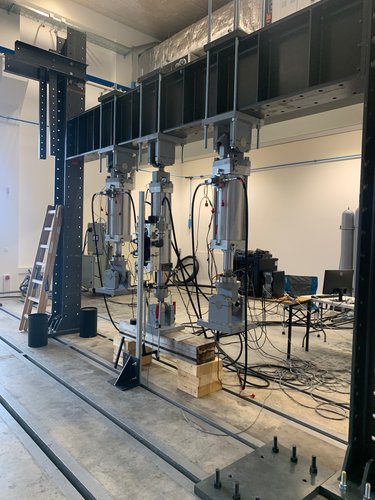
Doug is always there to give best advice on any matter related to seismic simulators, electrical or servo-hydraulic. His knowledge on all such systems is deep and he’s capable of combining the fittest to meet the required solutions in a short time.
NEOTEK OE P. XYSTRIS & Co Athens, Greece
About Servo Hydraulic Systems
Led by Doug Weller, Servo Hydraulic Solutions in Boulder, Colorado specializes in custom earthquake simulators, vibration testing systems, and shake tables using commercial off-the-shelf components.
We prioritize customer input and tailor solutions to individual needs, with nearly 20 years of experience in installation and testing. We offer remote services nationally and internationally.
If your current system needs troubleshooting or upgrades, we can revitalize it with computer interfaces and updates, leveraging our expertise with analog systems.
We emphasize local labor and materials for higher-quality results and reduced service calls, ultimately aiming to save our customers money.