- Have any Query
- (303) 807-1061
- doug@servohydraulicsolutions.com

Earthquake Simulation Shake Table Cost & Pricing Factors: Teaching Platforms vs Custom Servo-Hydraulic Systems

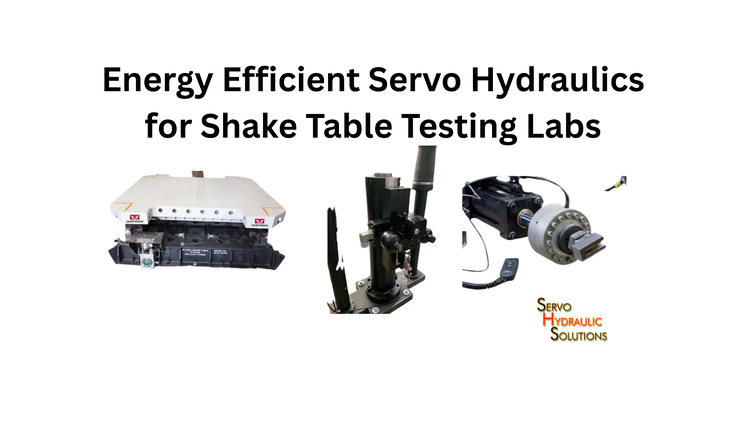
Energy Efficient Servo Hydraulics for Shake Table Testing Labs
November 11, 2026
Servo-Hydraulic vs Electrodynamic & Motorized Shake Tables: Which Vibration Table Fits High-Payload Testing?
November 12, 2026
Earthquake simulation shake table prices range from 653–3,000 for small open-source educational stepper platforms and 15,000–45,000 for entry-level commercial units, while custom high-payload servo-hydraulic shake tables typically require custom engineering quotes starting from tens of thousands to several hundred thousand dollars depending on payload, axes (uniaxial vs. multi-DOF), and Hydraulic Power Supply (HPU) capacity. Choosing an open-architecture COTS servo-hydraulic system allows university and commercial labs to match real seismic velocity and force requirements without paying proprietary OEM markups.
The price of an earthquake simulation shake table can range from a few hundred dollars for a basic classroom demonstration platform to hundreds of thousands of dollars or more for a custom servo-hydraulic research system. The final cost depends on table size, payload capacity, motion axes, actuator technology, control accuracy, hydraulic power, and installation requirements.
For universities, the challenge is choosing equipment that supports the intended teaching or research work without paying for capabilities they will rarely use. A small teaching platform and a large multi-axis structural testing system serve very different purposes. Understanding their cost differences before requesting quotations makes budgeting much easier.
What Determines Earthquake Shake Table Cost?
No standard price applies to every earthquake simulation shake table. Two systems may look similar in a product photograph but have completely different performance capabilities.
The following factors most influence the purchase price.
Table Size and Payload Capacity
Table dimensions and payload capacity are among the first specifications suppliers consider.
A compact platform used for small building models needs less structural material and lower drive capacity. A larger table designed to carry concrete specimens, equipment racks, or structural components requires a stronger frame, suitable bearings, and more powerful actuators.
Payload calculations should include the complete moving mass:
- Test specimen or structural model.
- Mounting fixtures and adapter plates.
- Sensors and measurement equipment.
- Additional accessories attached to the platform.
The specimen’s centre of gravity also matters. An unevenly distributed load can create additional forces and moments that affect the table design.
Number of Motion Axes
The number of controlled motion axes directly affects system complexity.
- Uniaxial: Produces motion in one direction.
- Biaxial: Produces horizontal motion in two directions.
- Three-axis: Adds vertical movement to horizontal motion.
- 6DOF: Controls three translational and three rotational degrees of freedom.
A multi-axis system needs additional actuators, control channels, mechanical arrangements, and often greater hydraulic capacity. It also requires more detailed commissioning to coordinate the movements accurately.
A university should select the configuration based on its research objectives rather than choosing more axes simply because they appear more advanced.
Actuation Technology
Shake tables can use different drive technologies, including electromechanical, electrodynamic, and servo-hydraulic systems.
Electromechanical and electrodynamic platforms can suit smaller applications, depending on performance requirements. Servo-hydraulic systems are commonly considered when testing requires high force, substantial displacement, or demanding dynamic performance.
The actuator type affects not only the initial equipment price but also the supporting infrastructure, maintenance requirements, and operating costs.
Control System and Software
The control system determines how accurately the table follows the commanded motion.
Basic educational platforms may have straightforward controls for demonstrations. Research systems can require digital servo controllers, waveform reproduction, feedback sensors, real-time monitoring, and advanced data acquisition.
Check whether the quoted price includes software licences, waveform management, data recording, analysis tools, and future software support. These items matter when comparing two proposals.
Installation and Facility Requirements
A shake table is not always a plug-and-play purchase. Larger systems may need reinforced foundations, strong-floor anchorage, electrical upgrades, hydraulic piping, cooling arrangements, and safety enclosures.
These requirements can add significantly to the project budget. They should be considered before selecting the equipment, not after delivery.
Teaching Shake Tables vs Servo-Hydraulic Systems
The main difference between teaching and research systems is the level of testing they are designed to perform. A teaching platform helps students understand earthquake behaviour, while a servo-hydraulic system supports controlled experiments involving more demanding forces, payloads, and motion profiles.
What Is a Teaching Shake Table?
A teaching shake table is generally a compact system used in classrooms and undergraduate laboratories.
It allows students to observe how structural models respond to simulated earthquake movement. Common demonstrations include:
- Building response at different frequencies.
- Resonance and natural frequency.
- The effect of structural height.
- The influence of bracing and stiffness.
- Basic vibration and damping behaviour.
These platforms are usually easier to install and operate than large research systems. They can be a practical starting point for universities introducing earthquake engineering experiments.
However, they have limitations. A basic teaching table may not reproduce the acceleration, displacement, payload, or control performance needed for advanced structural testing.
What Is a Servo-Hydraulic Shake Table?
A servo-hydraulic shake table uses hydraulic actuators, servo valves, a hydraulic power unit, and a feedback-based control system to produce controlled movement.
It may be used for testing:
- Reinforced concrete and steel structural models.
- Beam-column connections.
- Bridge components.
- Seismic performance of equipment.
- Structural systems under earthquake ground motions.
These installations require more detailed engineering. The actuator force, stroke, flow capacity, table stiffness, control response, and foundation must all be matched to the intended test conditions.
A research laboratory may need a custom system when standard equipment cannot meet its specimen or performance requirements.
Which System Fits Your Budget?
The right choice depends on what the institution expects students or researchers to accomplish.
| Requirement | Teaching platform | Servo-hydraulic research system |
| Main purpose | Classroom demonstrations | Advanced testing and research |
| Specimen size | Small models | Medium to large specimens, depending on design |
| Payload | Generally lower | Can be much higher |
| Motion | Usually simple, limited-axis movement | Uniaxial, biaxial or multi-axis configurations |
| Control | Basic or intermediate | Advanced feedback and motion control |
| Installation | Usually simpler | May require foundations and utilities |
| Budget | Lower | Significantly higher |
If the primary objective is to demonstrate resonance and basic structural response, a teaching platform may be enough. If the laboratory needs repeatable earthquake simulation for structural research, a research-grade system is a more appropriate investment.
Cost Breakdown of Earthquake Shake Tables
A useful earthquake shake table cost breakdown separates the main equipment from the supporting systems. This matters when one supplier offers a complete installation and another quotes only the table and drive equipment.
Shake Table Platform and Frame
The platform supports the test specimen and transfers the required motion. Its price depends on dimensions, payload, structural stiffness, material selection, and mechanical guidance.
Larger platforms require more substantial fabrication and may need specialised bearings or guidance arrangements. Mounting provisions also matter. A table should accommodate the specimen and fixtures without creating avoidable installation difficulties.
Actuators and Servo Valves
Actuators move, while servo valves regulate hydraulic flow in servo-hydraulic systems.
Their selection depends on:
- Required force capacity.
- Stroke length.
- Operating velocity.
- Dynamic response.
- Fatigue requirements.
- Valve flow capacity.
A system with multiple actuators also needs coordinated control and suitable hydraulic connections. This is one reason multi-axis configurations cost more than simpler systems.
Hydraulic Power Unit and Cooling
The hydraulic power unit (HPU) supplies pressurised oil to the actuators. It typically includes pumps, motors, reservoirs, filters, pressure-control components, and cooling equipment.
The required capacity depends on actuator pressure and flow demand. A system designed for high-force, high-speed testing may need a larger HPU than a smaller research platform.
Cooling should not be overlooked. Hydraulic losses generate heat, and the system needs sufficient cooling capacity to maintain suitable oil temperatures during operation.
Controller, Sensors, and DAQ
The controller manages table movement, while sensors provide feedback about the table and specimen response. A data acquisition system records the measurements.
Depending on the research requirements, the package may include:
- Accelerometers.
- Displacement transducers.
- Load cells.
- Strain gauges.
- Signal conditioning.
- Data acquisition hardware.
- Test-control and analysis software.
A basic teaching system may need only a few sensors. A structural research installation may require many measurement channels to monitor different locations on a specimen.
Fixtures, Mounting, and Safety Equipment
Fixtures and mounting arrangements secure the specimen to the table. Their design depends on specimen dimensions, loading direction, and expected test forces.
Safety equipment may include protective enclosures, emergency stops, interlocks, pressure protection, and access controls.
These items should be included in the quotation wherever they are required for safe operation. They are not optional extras just because they do not appear in the main table.
How Much Does a Teaching Shake Table Cost?
Teaching platforms are generally the more affordable option, but prices vary according to construction quality, platform size, motion capability, sensors, and software.
The following figures are broad planning estimates, not verified current supplier quotations.
Low-Cost Educational Platforms
Basic classroom demonstration platforms may cost approximately $100 to a few hundred dollars. They are intended for simple vibration demonstrations and small model experiments.
At this level, buyers should check build quality, motion control, safety features, and whether the equipment supports the planned demonstrations. A low purchase price does not automatically mean the platform suits university laboratory use.
Bench-Scale Teaching Systems
Bench-scale systems are generally more substantial than basic demonstration kits. They may offer a larger working surface, improved control, mounting options, and sensor integration.
Their cost depends on the included equipment. A system supplied with accelerometers, software, and data acquisition will naturally cost more than a basic mechanical platform.
Mid-Range University Shake Tables
Mid-range university systems may support more structured laboratory experiments and small-scale research.
They can offer improved motion control, higher payload capacity, programmable movement, and more measurement options. Some may use electromechanical or other non-hydraulic drive arrangements.
The price should be evaluated against the complete specification rather than the product category alone.
What Is Included in the Price?
Before accepting a teaching-table quotation, confirm whether it includes:
- Shake table and drive mechanism.
- Controller and power supply.
- Mounting fixtures.
- Sensors and data acquisition.
- Software and user documentation.
- Delivery and installation.
- Operator training.
- Warranty and technical support.
Some suppliers quote only the base equipment. Additional accessories can change the final amount.
How Much Does a Servo-Hydraulic Shake Table Cost?
The cost of a servo-hydraulic shake table has no single answer. Whereas compact systems generally begin in the tens of thousands of dollars, large-scale custom research installations can exceed hundreds of thousands of dollars.
These are broad order-of-magnitude indications, not fixed market prices. The final quotation depends on the system’s technical requirements and the scope of supply.
Small Servo-Hydraulic Systems
Smaller servo-hydraulic systems may suit laboratory-scale research with relatively limited payloads and motion requirements.
Their price depends on actuator capacity, stroke, hydraulic supply, control functions, and instrumentation. Even a relatively compact system requires properly engineered hydraulic and safety arrangements.
Medium-Capacity Research Systems
Medium-capacity systems are designed for more demanding laboratory experiments. They may support larger specimens, higher actuator forces, and more advanced test programmes.
The budget may include a dedicated HPU, servo valves, control software, sensors, mounting arrangements, and facility modifications.
At this level, installation and commissioning become important parts of the total project cost.
Large Multi-Axis Shake Tables
Large multi-axis systems are among the most expensive types of shake table installations.
They may require several actuators, high-capacity hydraulic power, specialised mechanical structures, advanced control systems, and substantial foundations.
The system must coordinate movement across the required axes while carrying the specified payload. Engineering, fabrication, integration, and testing can be extensive.
Why Custom Systems Cost More
Custom systems cost more because they are designed around specific performance requirements rather than supplied as standard equipment.
The project may involve:
- Special platform dimensions and load arrangements.
- Custom actuator mounting.
- Higher force or displacement requirements.
- Multiple coordinated motion axes.
- Specialised control and data acquisition.
- Integration with existing laboratory infrastructure.
- Detailed commissioning and acceptance testing.
Custom engineering can be worthwhile when standard equipment cannot meet the laboratory’s needs. It is less sensible when the additional features do not support a defined teaching or research objective.
Key Cost Drivers for Custom Shake Tables
When evaluating custom servo-hydraulic shake table pricing, the most useful approach is to examine the test requirements one by one.
Payload, Stroke, and Acceleration Requirements
Payload determines how much moving mass the table must carry. Stroke defines the available movement, while acceleration describes how quickly the table’s velocity changes.
These requirements interact. A heavy specimen requiring high acceleration may need substantial actuator force and hydraulic capacity.
Suppliers should receive the expected specimen mass, centre of gravity, displacement, velocity, and acceleration requirements. Table dimensions alone are not enough for accurate system sizing.
Uniaxial, Biaxial, and 6DOF Configurations
A uniaxial system has a simpler motion arrangement than a biaxial or 6DOF system.
A 6DOF installation controls three translational and three rotational movements. It generally requires more actuators, more complex mechanical arrangements, additional control channels, and careful calibration.
It is worth asking whether all six degrees of freedom are necessary for the planned research. A simpler configuration may meet the test objectives at a lower cost.
Hydraulic Power and Flow Requirements
Hydraulic power requirements depend on the pressure and flow the actuators need.
Higher flow demand can require larger pumps, motors, servo valves, manifolds, and piping. The HPU must also support the expected operating duty cycle.
The supplier should explain the proposed hydraulic capacity and how it matches the required test profile. Oversizing can increase initial and operating costs, while undersizing can prevent the system from meeting its performance requirements.
Control Performance and Data Acquisition
Research-grade testing requires reliable control and measurement.
The system may need to reproduce earthquake records, follow programmed waveforms, coordinate multiple actuators, and record feedback signals. These requirements affect controller selection, sensor capacity, software, and commissioning.
Ask for the control-system specifications and expected performance rather than accepting a general description such as “advanced digital control.”
Integration With Existing Laboratory Equipment
Existing infrastructure may reduce the project cost if it is compatible with the proposed system.
For example, a university may already have a suitable strong floor, electrical supply, data acquisition equipment, or hydraulic services. However, compatibility should be checked through technical drawings, load calculations, and equipment specifications.
Reusing existing facilities can be useful, but assuming they are suitable without verification may lead to expensive changes later.
Hidden Costs Beyond the Shake Table Price
The equipment quotation is only one part of the project budget. Universities should account for the supporting work needed to install, operate, and maintain the system.
Foundation and Strong Floor Requirements
Large shake tables transfer dynamic forces to the supporting structure. The laboratory may require a reinforced concrete foundation, strong-floor anchorage, embedded plates, and suitable grouting.
Confirm foundation requirements with the equipment supplier and the structural engineer before construction begins.
Electrical Supply and Hydraulic Piping
Servo-hydraulic installations may need electrical upgrades to support the motors, pumps, controller, and cooling equipment.
Hydraulic piping, hoses, manifolds, filtration, and return lines also add to the installation scope. Their layout should allow safe operation and convenient maintenance.
Installation, Commissioning, and Training
Installation can involve mechanical assembly, alignment, hydraulic connections, electrical integration, calibration, and performance checks.
Commissioning verifies that the equipment operates according to the agreed specification. Operator training helps laboratory staff understand safe operating procedures, system limits, and routine maintenance.
Check whether these services are included in the quoted price or charged separately.
Maintenance, Spare Parts, and Upgrades
Long-term ownership costs include hydraulic oil, filters, seals, hoses, calibration, servicing, and replacement parts.
Software support and controller upgrades may also be relevant over the system’s working life.
Before purchasing, a university should ask about spare-part availability, warranty coverage, service response, and recommended maintenance intervals.
How to Set a Realistic Shake Table Budget
A realistic budget starts with the experiments the laboratory needs to perform. It shouldn’t start with a preferred product or an arbitrary equipment price.
Define the Tests You Need to Run
List the specimen types, expected payloads, motion axes, acceleration, displacement, velocity, and frequency requirements.
Also consider how often the table will be used and whether several research projects will share the equipment.
This information helps suppliers recommend a suitable system rather than quoting a general-purpose product.
Separate Essential Features From Optional Upgrades
Divide requirements into two groups.
Essential features:
- Required payload and platform dimensions.
- Necessary motion axes.
- Required actuator performance.
- Suitable control and feedback.
- Essential sensors and safety systems.
Optional or future features:
- Additional DAQ channels.
- Extra mounting fixtures.
- Advanced analysis software.
- Expansion provisions.
- Additional sensors for future projects.
This approach helps control the initial budget without overlooking important capabilities.
Compare Complete System Quotations
Request itemised quotations using the same technical specification. Compare the equipment, software, instrumentation, installation, commissioning, training, warranty, and support.
A lower quotation may exclude components that another supplier has included. Comparing only the final price can therefore lead to the wrong decision.
Plan for Long-Term Operating Costs
Estimate electricity, hydraulic oil, maintenance, calibration, spare parts, and software support.
For hydraulic systems, consider the HPU’s expected operating hours and cooling requirements. A lower-priced system may not be the most economical option over its full service life.
Choosing Between Teaching and Custom Systems
The final decision should reflect the laboratory’s teaching and research plans.
When a Teaching Platform Is Enough
Choose a teaching platform when the main purpose is to demonstrate basic earthquake engineering concepts, conduct small model experiments, or support undergraduate laboratory sessions.
It can be a practical and economical starting point when high payloads and advanced motion control are not required.
When a Custom Servo-Hydraulic System Is Needed
A custom servo-hydraulic system is more appropriate when the laboratory needs higher actuator forces, substantial displacement, demanding dynamic performance, larger specimens, or coordinated multi-axis motion.
It may also be necessary when the testing programme has specific requirements that standard teaching platforms cannot meet.
Questions to Ask Before Requesting a Quote
Before contacting suppliers, prepare answers to these questions:
- What types of specimens will the table carry?
- What is the maximum moving payload?
- Which motion axes are required?
- What acceleration, velocity, and displacement are needed?
- What frequency range must the system support?
- Is a hydraulic or electromechanical drive preferred?
- What sensors and data acquisition channels are required?
- What foundation and electrical facilities are available?
- Does the quotation include installation, commissioning, and training?
- What warranty, maintenance, and future upgrade support is offered?
Clear answers make it easier to receive comparable proposals and avoid unnecessary specification changes.
Frequently Asked Questions
How Much Does a Basic Shake Table Cost?
Basic classroom or demonstration platforms can cost approximately $100 to a few hundred dollars. They are intended for simple vibration demonstrations rather than advanced research-grade earthquake simulation.
How Much Does a Servo-Hydraulic Shake Table Cost?
Small servo-hydraulic systems cost tens of thousands of dollars, whereas large custom research systems can run into the hundreds of thousands or more. Payload, actuator capacity, motion axes, hydraulic power, controls, and installation determine the final price.
What Increases Shake Table Price the Most?
The main cost drivers are payload capacity, table dimensions, actuator force, stroke, number of motion axes, hydraulic flow, control performance, and installation requirements. Custom engineering can also increase the overall investment.
Does the Price Include Installation and Training?
Not always. Some quotations include delivery, installation, commissioning, and operator training, while others list these services separately. Request an itemised quotation before comparing suppliers.
Can a University Buy a Shake Table in Stages?
Yes, if the initial system is designed with compatible expansion options. However, upgrading from uniaxial to biaxial or 6DOF movement may require major changes to the mechanical structure, actuators, hydraulic supply, and control system.
Is a Teaching Shake Table Suitable for Research?
It can support basic demonstrations and small-scale experiments. It may not provide the payload, displacement, acceleration, frequency range, or control performance needed for advanced structural research.
What Is the Difference Between a Teaching Table and a Research Shake Table?
Teaching tables prioritise simple operation and classroom demonstrations. Research systems are designed for more demanding payloads, accurate motion control, repeatability, instrumentation, and complex test profiles.
Do I Need a Hydraulic Power Unit for Every Shake Table?
No. Electromechanical and electrodynamic tables may not require an HPU. Servo-hydraulic systems generally need a hydraulic power unit sized to meet actuator pressure, flow, and duty-cycle requirements.
How Much Does a 6DOF Shake Table Cost?
A 6DOF shake table generally costs substantially more than a basic uniaxial or biaxial system. Its additional actuators, coordinated controls, hydraulic capacity, mechanical design, and commissioning requirements influence the final price.
Can a Shake Table Be Upgraded Later?
Some systems can be expanded with additional sensors, DAQ channels, software functions, or fixtures. Increasing payload capacity or adding motion axes may require significant mechanical, hydraulic, and control-system redesign.
What Hidden Costs Should Universities Budget For?
Universities should account for foundations, strong-floor anchorage, electrical upgrades, hydraulic piping, cooling, installation, commissioning, training, maintenance, spare parts, and future upgrades.
How Do I Compare Shake Table Quotations Fairly?
Compare proposals against the same written specification. Include payload, table size, motion axes, acceleration, displacement, frequency range, controller, sensors, installation, training, warranty, and long-term support.
Conclusion
The right earthquake simulation shake table is not necessarily the most expensive one. A teaching platform may be sufficient for classroom demonstrations, while advanced structural research may require a custom servo-hydraulic system with greater capacity and more sophisticated controls.
Before purchasing, define the testing requirements, review the full equipment and installation costs, and compare suppliers using the same technical specifications. This gives universities a more realistic budget and helps ensure the selected shake table meets their actual teaching and research needs.
Ready to Specify Your Custom Shake Table or Testing System?
Avoid proprietary OEM markups and get open-architecture COTS servo-hydraulic solutions tailored to your laboratory’s precise payload, axes, and performance requirements.