- Have any Query
- (303) 807-1061
- doug@servohydraulicsolutions.com
OEM ReNew Packages vs Independent COTS Retrofits: Cost, Lead Time & Vendor Lock-In Comparison

How to Upgrade an Old Hydraulic Actuator Test Stand with Obsolete Parts (Without Buying a New Machine)
November 19, 2026
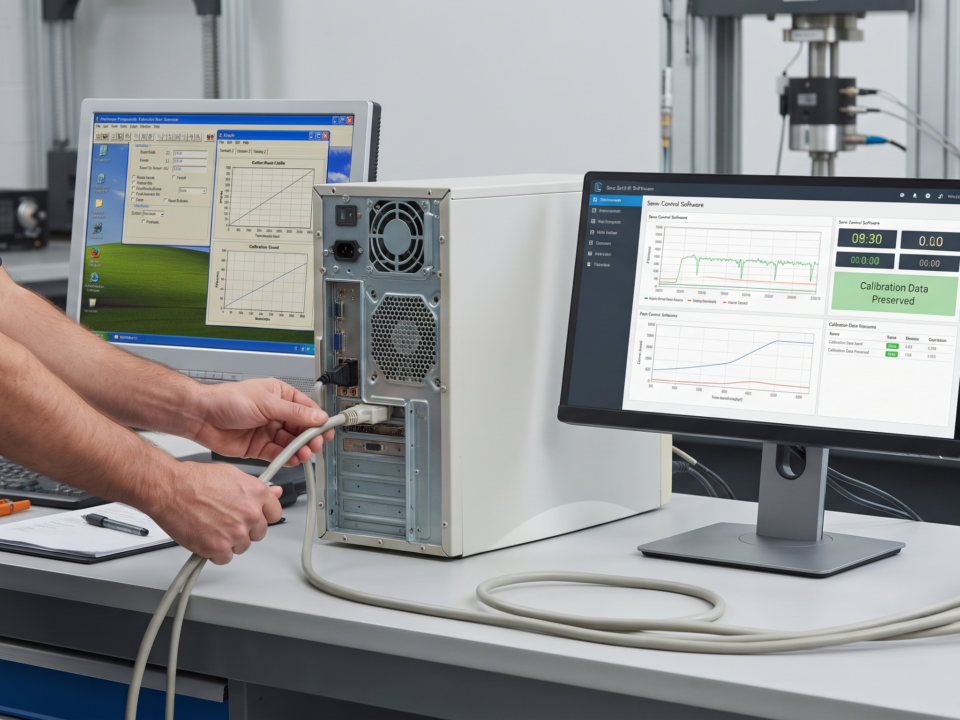
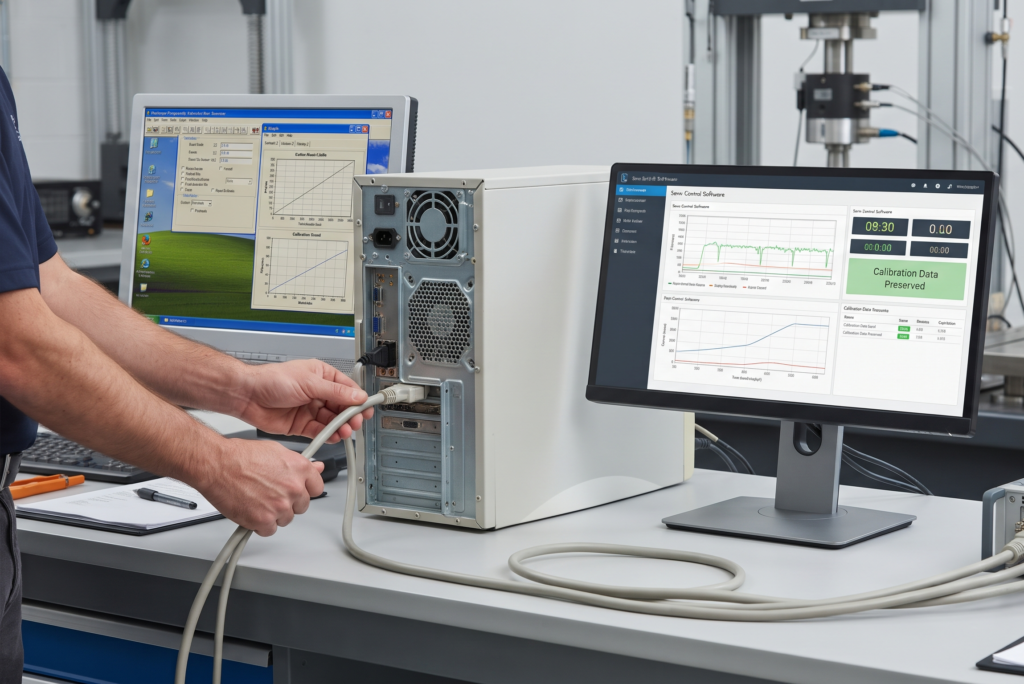
Replacing Legacy Windows XP Test Computers & Proprietary Software Without Losing Historical Calibration Data
November 20, 2026
Choosing between an OEM ReNew package and an independent COTS servo hydraulic retrofit depends on more than the initial quotation. An OEM upgrade may offer manufacturer-led integration and support, while an independent retrofit can provide greater flexibility in component selection, software and long-term maintenance. The right choice depends on the condition of the existing test system, required performance, delivery schedule and the level of control the laboratory wants to retain.
For testing laboratories, this is an important investment decision. A lower purchase price does not always mean lower ownership cost, and a familiar OEM service arrangement does not automatically provide the best long-term value. Compare both options across the equipment’s entire operating life.
What Is an OEM ReNew Package?
An OEM ReNew package is a manufacturer-provided modernization or refurbishment solution for existing testing equipment. The exact scope depends on the equipment model, its age, available upgrade options and the manufacturer’s current service offering.
For a servo hydraulic testing system, the package may update selected control electronics, software, hydraulic interfaces or other ageing components while retaining suitable parts of the original machine.
How an OEM ReNew Upgrade Works
The process generally begins with an assessment of the existing machine. The OEM reviews its configuration, operating condition and available upgrade options.
A typical project may involve:
- Reviewing the equipment’s model and configuration.
- Inspecting the controller, hydraulic system and sensors.
- Defining the available modernization package.
- Replacing or updating the agreed components.
- Installing software and configuring the system.
- Commissioning and verifying operation.
The main attraction is that the manufacturer has access to its own equipment documentation and may have established procedures for supported upgrade configurations.
However, the scope should never be assumed from the package name alone. Laboratories should request a detailed list of included hardware, software, services and exclusions.
What Is Included in an OEM ReNew Package?
Depending on the equipment and package, the scope may include:
- Replacement control electronics.
- Updated operating software.
- New or refurbished electrical components.
- Sensor and signal interface upgrades.
- Selected hydraulic component servicing.
- Installation and commissioning.
- Operator training.
- Manufacturer warranty or service support.
Some packages may cover only the control system, while others may include broader mechanical or hydraulic work.
Ask whether the quotation includes software licensing, calibration, travel, installation materials, spare parts and future technical support. These items can significantly affect the final cost.
When an OEM ReNew Package Is Suitable
An OEM upgrade can be a good option when:
- The laboratory wants manufacturer-led modernization.
- The machine has a known and supported upgrade path.
- Original components or compatible replacement assemblies remain available.
- The equipment must follow established manufacturer procedures.
- The organization prefers a single supplier for integration and support.
- Internal engineering resources for custom integration are limited.
For laboratories where minimising integration responsibility is a priority, an OEM-led package may simplify project management.
Benefits of OEM ReNew Upgrades
Manufacturer familiarity: The OEM may have access to original drawings, specifications and equipment configuration records.
Established integration procedures: Supported upgrade packages may follow documented installation and commissioning processes.
Single point of responsibility: The laboratory may have one supplier responsible for the agreed scope.
Equipment-specific support: Manufacturer technicians may be familiar with the original system architecture.
Defined warranty arrangements: The package may include warranty coverage for specified parts and services.
These advantages are particularly useful when the existing equipment has a complex configuration, or the laboratory does not have a dedicated engineering team.
Limitations of OEM ReNew Packages
An OEM package may also have limitations.
- The available upgrade scope may be restricted to manufacturer-approved options.
- Proprietary hardware or software may remain part of the system.
- Service and software costs may be higher than expected.
- Replacement parts may need to be purchased through the OEM.
- Delivery depends on the manufacturer’s workload and component availability.
- Configuration files or software access may be subject to licensing restrictions.
None of these limitations applies to every OEM package. They are issues to investigate before signing a contract.
What Is an Independent COTS Retrofit?
An independent COTS retrofit modernizes existing testing equipment using commercially available components and engineering services from a supplier other than the original equipment manufacturer.
COTS stands for commercial off-the-shelf. It refers to standard products that are available for use in different industrial applications, rather than components manufactured exclusively for one machine.
A COTS servo hydraulic retrofit—such as modern COTS digital controller retrofits for ageing test stands—may replace selected controller electronics, valve amplifiers, signal-conditioning hardware, data acquisition equipment or software while retaining suitable parts of the existing test stand.
How an Independent COTS Retrofit Works
The independent supplier begins by assessing the existing system and identifying which components can be retained.
The engineering team then develops an upgrade design around the laboratory’s requirements.
A typical process includes:
- Inspecting the frame, actuator and hydraulic system.
- Documenting the controller, sensors and servo valve interfaces.
- Defining the required control and data acquisition functions.
- Selecting compatible commercial components.
- Designing electrical and software interfaces.
- Installing and configuring the new equipment.
- Commissioning and validating the upgraded system.
The important difference is that component selection may be more flexible. The supplier can evaluate different commercially available products rather than being limited to a specific OEM upgrade package.
That flexibility also creates an engineering responsibility: the replacement components must be integrated correctly.
What Is Included in a COTS Retrofit?
A project may include:
- Digital controller hardware.
- Commercial servo valve amplifiers.
- Analogue and digital input/output modules.
- Sensor signal-conditioning equipment.
- Data acquisition hardware.
- Modern control software.
- Electrical cabinet modifications.
- Custom interface electronics.
- Installation and commissioning.
- Technical documentation and training.
The scope can be tailored to the actual machine. For example, a laboratory with a reliable hydraulic power unit and actuator may only need a controller and valve amplifier upgrade.
When an Independent COTS Retrofit Is Suitable
An independent approach may be suitable when:
- Original electronics are discontinued.
- The OEM upgrade is unavailable or outside the budget.
- The laboratory wants to retain serviceable equipment.
- Standard commercial components can meet the required performance.
- The organization wants more flexibility in future maintenance.
- The laboratory has access to engineering support for integration and validation.
This can also help when existing equipment has been modified over the years and no longer matches a standard manufacturer configuration.
Benefits of COTS Retrofits
Component flexibility: The retrofit supplier can assess different supported hardware options.
Reduced dependence on proprietary parts: Standard components may offer additional sourcing options.
Tailored upgrade scope: The project can focus on the equipment that actually needs modernization.
Potential cost savings: Retaining serviceable components and selecting suitable commercial alternatives may reduce initial investment. For example, upgrading legacy hydraulic actuator test stands with COTS parts can help address discontinued amplifiers and obsolete rig electronics without replacing sound frames or hydraulic power units.
Greater maintenance choice: The laboratory may have access to multiple suppliers for standard replacement components.
Future expansion: A well-designed scalable COTS system architecture can make it easier to update software, sensors, data acquisition, or motion axes later.
Limitations of COTS Retrofits
An independent retrofit is not automatically simpler or cheaper.
Potential challenges include:
- Limited access to original machine documentation.
- Custom electrical and hydraulic interface work.
- Additional commissioning and validation requirements.
- Different warranty arrangements across components.
- Dependence on the retrofit supplier’s engineering quality.
- Responsibility for maintaining an integrated system.
A supplier may be highly capable of replacing a controller but lack the experience needed to configure a demanding hydraulic control loop. Laboratories should evaluate technical competence, not just component prices.
OEM ReNew vs Independent COTS Retrofit
Both approaches can extend a testing machine’s service life. Their differences become clearer when comparing the commercial and technical arrangements.
Cost Comparison
OEM packages may have a higher initial price because they can include manufacturer-specific hardware, software, integration and support.
Independent COTS retrofits may offer more flexibility in selecting components and retaining existing equipment. However, custom engineering and commissioning can add costs.
| Cost factor | OEM ReNew | Independent COTS retrofit |
| Hardware | Manufacturer-approved components | Selected commercial components |
| Software | May use OEM-specific platform | May use supported commercial platform |
| Integration | Manufacturer-defined scope | Supplier-engineered scope |
| Customization | Depends on package | Often more flexible |
| Support | OEM service arrangement | Independent supplier or component vendors |
| Spare parts | May follow OEM channels | May allow multiple sourcing options |
The cheapest quotation is not necessarily the most economical choice. Compare what each supplier is actually delivering.
Lead Time Comparison
Lead time depends on component availability, engineering workload, installation requirements and commissioning schedules.
An OEM may have established upgrade procedures, but manufacturer-specific components could have long procurement times.
An independent supplier may source standard commercial hardware from multiple vendors. On the other hand, a complex interface design can add engineering and testing time.
Ask both suppliers for separate estimates covering:
- Initial inspection.
- Engineering and design.
- Hardware procurement.
- Software configuration.
- Installation.
- Commissioning.
- Final acceptance testing.
A realistic schedule should also include time for unexpected compatibility issues.
Vendor Lock-In Comparison
Vendor lock-in occurs when a laboratory becomes heavily dependent on one supplier for essential hardware, software, servicing or configuration access.
An OEM upgrade may retain proprietary components or software licensing arrangements. An independent retrofit can reduce this dependence if it uses documented interfaces and standard components.
However, independence is not guaranteed. A retrofit supplier can also create lock-in through custom software, restricted configuration files or exclusive maintenance arrangements.
The key question is simple: can the laboratory maintain, modify and support the upgraded system if the original supplier is no longer available?
Technical Support Comparison
OEM support can be valuable when the manufacturer understands the equipment’s original design and has access to relevant technical documentation.
Independent suppliers may provide more direct support for customized retrofit systems, particularly when they designed the electrical and software interfaces.
Compare:
- Response times.
- Remote troubleshooting availability.
- On-site service coverage.
- Access to technical documentation.
- Software support arrangements.
- Availability of replacement components.
- Responsibility for faults involving third-party equipment.
Get the support commitments in writing. General statements such as “lifetime support” are not enough without clear terms.
Spare Parts and Maintenance Comparison
An OEM arrangement may provide access to manufacturer-specific parts, but availability and pricing can depend on the equipment’s age and product support status.
COTS systems may provide more sourcing flexibility, provided the selected parts are genuinely standard and supported.
For both options, ask for a recommended spare-parts list. It should identify critical components, expected availability and suitable replacement arrangements.
Warranty and Liability Comparison
Warranty coverage can differ considerably between projects.
An OEM may provide a package-level warranty for the work it performs, subject to its terms and exclusions.
An independent retrofit may include separate warranties for the controller, amplifier, software and installation work.
The laboratory should establish who is responsible if an interface problem affects the complete machine. A component manufacturer’s warranty may not cover faults caused by system integration.
Lifecycle Cost Comparison
The initial purchase price is only one part of the investment. A proper COTS lifecycle cost guide should consider installation, support, spare parts, downtime and the expected operating life of the upgraded equipment.
Initial Purchase Cost
The initial quotation may include controller hardware, software, valve amplifiers, sensors and electrical cabinet components.
Compare equivalent scopes. Do not compare an OEM proposal that includes installation and training directly with a COTS hardware-only quotation.
Installation and Commissioning Cost
Installation costs may include:
- Engineering and electrical design.
- Cabinet modifications.
- Wiring and interface work.
- Hydraulic servicing.
- Software configuration.
- Commissioning tests.
- Operator training.
Independent projects may need additional custom interface work. OEM packages may have separate installation or travel charges. Check the exclusions carefully.
Maintenance and Spare Parts Cost
Estimate the cost of routine servicing and likely replacement parts over the expected operating period.
For COTS equipment, verify that the selected products have an established supply and support path. For OEM equipment, confirm the availability and pricing of proprietary parts.
A low initial component price is less attractive if replacement modules are difficult to source.
Software and Support Cost
Software can become a recurring cost through licenses, updates, technical support or maintenance agreements.
Ask:
- Is the license perpetual or subscription-based?
- Are updates included?
- Is remote support charged separately?
- Can test data be exported without additional fees?
- Can the laboratory access configuration files?
- What happens if the support contract ends?
These details are particularly important when avoiding proprietary service contracts in testing labs.
Downtime and Productivity Cost
Downtime has a direct operational cost.
A machine that cannot run tests may delay research programmes, product qualification, customer deliveries or scheduled laboratory work.
Consider a simple example. If a laboratory normally completes several tests each working day, an unexpected two-week delay can affect more than the maintenance budget. It may also create rescheduling costs and missed project deadlines.
When comparing proposals, consider the expected installation period, component delivery risk, and the availability of temporary operating arrangements.
Total Cost of Ownership
A useful comparison considers the complete cost over a defined period.
[
\text{TCO} = \text{Purchase} + \text{Installation} + \text{Maintenance} + \text{Software} + \text{Downtime}
]
For a fair comparison, use the same evaluation period and include expected support and replacement costs for both options.
A practical example:
| Cost category | OEM option | COTS option |
| Initial hardware and software | Quoted cost | Quoted cost |
| Engineering and installation | Quoted cost | Quoted cost |
| Annual support | Estimated cost | Estimated cost |
| Spare parts | Estimated cost | Estimated cost |
| Expected downtime | Estimated cost | Estimated cost |
| Total over evaluation period | Calculated total | Calculated total |
Use actual supplier quotations rather than assumed market prices. Also record any performance or support differences that cannot be represented by a single cost figure.
How to Avoid Proprietary Service Contracts
A modernization project should leave the laboratory with a system it can maintain and support over time. That requires attention to software access, documentation, spare parts and contract terms before the upgrade begins.
What Is Vendor Lock-In?
Vendor lock-in occurs when switching suppliers or maintaining equipment independently becomes difficult because essential functions depend on one provider’s proprietary products or services.
For example, a laboratory may receive a modern controller but discover that only the original supplier can modify its configuration. Even though the hardware is installed, the laboratory remains dependent on that supplier for routine changes.
Common Lock-In Risks in OEM Packages
Look closely at arrangements involving:
- Proprietary controller hardware.
- Restricted software licenses.
- Supplier-only configuration tools.
- Exclusive diagnostic access.
- Special connectors or non-standard interfaces.
- Mandatory annual service contracts.
- Limited access to wiring diagrams.
- Replacement parts available only through one channel.
These features are not necessarily unacceptable. Some proprietary systems provide useful technical support. The concern is whether the laboratory understands the long-term cost and restrictions before agreeing to them.
Contract Clauses That Reduce Lock-In
Consider requesting contract terms that address:
- Documentation ownership and access: Define which drawings, wiring diagrams, and configuration records the laboratory receives.
- Configuration access: Specify access to relevant controller settings and project files.
- Data portability: Confirm that test data can be exported in usable formats.
- Spare-part availability: Define supply arrangements and replacement options.
- Support flexibility: Clarify whether the laboratory can use qualified third-party service providers.
- Software licensing: State what happens to the license if the support agreement ends.
- Exit arrangements: Define how the supplier will support a future transfer to another service provider.
Have legal and technical teams review the terms together. A contract can appear flexible while still restricting access to essential engineering information.
How to Negotiate Service Terms
Avoid accepting a long-term service agreement simply because it is included in the initial proposal.
Ask for separate pricing for installation, warranty, annual maintenance, software updates and remote support.
Also clarify:
- Whether annual support is compulsory.
- What services are included.
- Whether emergency visits carry additional charges.
- Whether response times are guaranteed.
- Whether the laboratory can perform routine maintenance.
- Whether third-party technicians can work on the equipment.
A clear service arrangement makes future budgeting easier.
How to Retain Control of Configuration Files
Configuration files are important because they contain information used to operate and maintain the upgraded system.
The contract should specify which files will be provided, in what format and when.
Depending on the platform, these may include:
- Controller configuration files.
- Input and output mapping.
- Valve amplifier settings.
- Sensor scaling information.
- Software project files.
- Electrical drawings.
- Test templates.
- Commissioning records.
The laboratory should also maintain secure backups and a record of approved changes. Access to files should not be confused with ownership of third-party software intellectual property; licensing terms still apply.
How to Ensure Future Spare-Part Access
Before selecting a system, ask suppliers to identify the manufacturer, model and availability status of critical components.
Prefer documented products with clear replacement specifications and support arrangements where technically suitable.
The final handover should include a spare-parts list, product datasheets, wiring information and recommended maintenance intervals.
How to Choose Between OEM and COTS
There is no universal winner. The best option depends on the machine’s condition, the laboratory’s technical resources and the level of independence it wants after modernization.
Define the Test Requirement First
Start with the tests the equipment must perform after the upgrade.
Specify:
- Required force and displacement range.
- Test frequency and waveform.
- Control modes.
- Measurement channels.
- Data acquisition requirements.
- Automation needs.
- Safety requirements.
- Reporting and traceability.
This prevents suppliers from proposing expensive features that the laboratory does not need.
Assess the Condition of the Existing System
Inspect the mechanical frame, actuator, hydraulic power unit, servo valves, sensors and electrical cabinet.
If the major components remain in good condition, a targeted retrofit may be practical.
If the actuator, frame and hydraulic supply all need substantial work, compare the retrofit cost with a replacement machine.
Compare Complete Lifecycle Costs
Request itemised quotations from both OEM and independent suppliers.
Use the same scope, operating requirements and evaluation period. Include installation, commissioning, maintenance, software, spare parts and downtime.
A lower initial quotation should not hide expensive recurring support requirements.
Review Support and Spare-Part Availability
Check whether the proposed system can be maintained over the expected operating life.
Ask about component availability, software updates, replacement hardware, technical support and access to documentation.
An independent retrofit should have a clear support plan just as an OEM package should.
Evaluate Lead Time and Downtime
Ask for a realistic project schedule, not just a hardware delivery estimate.
Confirm the expected time for engineering, procurement, installation, commissioning and acceptance testing. Identify long-lead components and agree on how unexpected delays will be managed.
Questions to Ask Before Buying
Before approving either proposal, ask:
- What exactly will be replaced and retained?
- Which components are proprietary?
- Are standard commercial alternatives available?
- Who is responsible for integration?
- What performance checks are included?
- Who provides warranty coverage?
- Can the laboratory access configuration files?
- Are annual software or support fees compulsory?
- Can another qualified supplier maintain the system?
- What documentation will be handed over?
- What are the expected spare-parts lead times?
- What happens if a critical component becomes discontinued?
The answers will often reveal more about long-term value than the headline price.
Conclusion
An OEM ReNew package and an independent COTS servo hydraulic retrofit can both provide a route to modernizing older testing equipment. The OEM approach may offer manufacturer-led integration and support, while an independent retrofit can provide greater freedom to select components, software and future service arrangements.
The right decision comes down to the complete operating picture: initial cost, installation time, technical compatibility, maintenance, spare-part access and vendor dependence. Laboratories should compare itemized proposals over the same lifecycle period rather than choosing based on purchase price alone.
A good modernization project should leave the test stand reliable, maintainable and properly documented. It should also give the laboratory a clear understanding of who controls its software, configuration files and future service options. Whether you are planning a test stand retrofit, complete testing systems, or engineered custom shake tables, our engineering team can help you evaluate the right technical path.
FAQs
1. What is an OEM ReNew package?
An OEM ReNew package is a manufacturer-provided upgrade or refurbishment solution for existing equipment. Its scope may include new electronics, software, selected hardware replacements, installation and commissioning.
2. What is an independent COTS retrofit?
An independent engineering supplier carries out an upgrade using suitable commercial off-the-shelf components. The work may include controller hardware, servo valve amplifiers, software, sensors and custom interfaces.
3. What is the difference between an OEM ReNew package and a COTS retrofit?
An OEM package follows the original manufacturer’s upgrade offering, while an independent COTS retrofit allows a supplier to select suitable commercial components and engineer the interfaces. Their support, cost and integration arrangements can also differ.
4. Which option is cheaper: OEM ReNew or COTS retrofit?
There is no fixed answer. A COTS retrofit may reduce hardware costs and allow more component choices, but custom engineering can add expense. Compare complete quotations, including installation, software, maintenance and downtime.
5. Which option has a shorter lead time: OEM ReNew or COTS retrofit?
It depends on component availability and engineering workload. OEM packages may have established procedures but depend on manufacturer-specific parts, while COTS projects may have more sourcing options but require custom integration.
6. What is vendor lock-in in a servo hydraulic retrofit?
Vendor lock-in occurs when a laboratory depends on one supplier for essential software, hardware, configuration changes, spare parts or maintenance, making it difficult or expensive to switch providers.
7. How can I avoid proprietary service contracts after an OEM upgrade?
Review software licensing, maintenance obligations and configuration access before signing. Request clear terms for independent servicing, spare-part access, documentation and support after the warranty period.
8. What contract clauses reduce vendor lock-in?
Useful clauses cover configuration-file access, documentation handover, data portability, spare-part availability, third-party servicing rights, software licensing and exit arrangements.
9. Can I retain control of configuration files after an OEM ReNew upgrade?
That depends on the software license and contract. Request access to relevant project files, controller settings and configuration records, and clarify which files can be modified or transferred.
10. Can I use COTS parts after an OEM ReNew upgrade?
Potentially, if the components meet the system’s electrical, hydraulic and functional requirements, check compatibility and warranty implications before making changes to an OEM-upgraded system.
Evaluating an OEM Upgrade vs. an Independent COTS Retrofit?
Compare lifecycle costs, lead times, and long-term maintenance independence for your existing servo-hydraulic test stand without locking your lab into proprietary service contracts.